
- Published on
This is something that keeps parents awake at nights and often comes up in conversation when parents get together. There is not an option to avoid technology and the connectedness that the internet provides. Instead we must find ways to teach our children to enjoy all the advantages that technology can bring us in a safe way. The big but is of course, but how do we let our children/young people access all this whilst keeping themselves safe.
In last week’s blog I discussed some of my thinking around how education is being impacted by technology. This week I’d like to focus much more on the question of safety. I recently read a fantastic book written by John Parsons, Keeping Your Children Safe Online: A guide for New Zealand parents, published by Potton and Burton. I would recommend this as a great read to anyone parenting children and young people of any age. John has a very sensible and practical approach.
One of the key themes that runs through the book is that parents treat the online world as an actual physical space just the same as they treat any other space their child might find themselves in and then think about applying some of the same guidelines. When our children are little, we would not dream of allowing them to walk to the park alone. When we take them to the park, we take time to demonstrate and guide them in the safe use of playground equipment and show them the areas that are safe to run or kick a ball. As they get older and we as parents feel that they are ready to walk to school or the park on their own we would ensure they knew a safe route and what to do if something went wrong. When our child arrived home after an independent outing, we would most likely check in to see how things had gone and offer some support and advice if something didn’t go as planned. John urges parents to think about the online world in the same way.
He cautions parents not to allow their children to set up Facebook or other social media accounts when they are too young to do so. In the same way that we wouldn’t send our 2-year-old to play at the park on their own the online location of social media sites isn’t set up to provide a safe place for children younger than the stated age. He also offers the chilling idea that if your child has signed up when they are younger by lying about their age everyone will see their age as several years older than it is. This can too easily lead to inappropriate relationships based on a misunderstanding about the age of the person who opened the social media account. A further point he makes is that if your child asks to set up the account when they are too young this is a great moment to discuss being respectful of the companies who have set the social media up and how you expect your child to behave as they interact with the world.
John covers a wide range of concerns common to parents in terms of keeping children safe online including those that we may find difficult to discuss such as sexting or sharing inappropriate images and avoiding sexual predators online. His advice is sensible and down to earth. He has several principles which parents can apply to many of the situations encountered online. He provides reassuring advice about what to do when things have already gone wrong. There is a comprehensive list at the back of the book with contact information about the various services that can help. I have often heard adults saying that once an inappropriate image or piece of information is online it’s there forever. John corrected this by clarifying that as further information is put online about an individual the older information slips away. Perhaps an expert could find the old information, but general searches won’t turn up the unfortunate photo or post. This must be very comforting to anyone who has made a mistake online.
Of relevance to parents is that John cautions us to keep what he terms the ‘Cyber Tooth Tiger’ under control. This is part of our evolutionary history and stems from the way that people have evolved from the times when the proper reaction to a sabre-toothed tiger was a strong one in order to survive. When we or our children is under threat we can react very strongly and at times becoming angry with the child for putting him or herself or our family in harms way. The problem with this reaction is that it tends to put children off telling us what is going on. If we don’t know what’s happening, we can’t help.
Overall John is letting us know that what we do effectively to keep our children not just safe but thriving in the physical world are the same things we should do to keep our children safe in the online world. There is no need for us to be technological wizards in order to help our children. We just need to be engaged and interested parents.
As a further note, John lists Netsafe at the back of his book among many other agencies. I thought it was worthwhile to repeat the address here, https://www.netsafe.org.nz/. Netsafe should be a go to place for anyone using the internet. There are sections of relevance for education and parents.
In last week’s blog I discussed some of my thinking around how education is being impacted by technology. This week I’d like to focus much more on the question of safety. I recently read a fantastic book written by John Parsons, Keeping Your Children Safe Online: A guide for New Zealand parents, published by Potton and Burton. I would recommend this as a great read to anyone parenting children and young people of any age. John has a very sensible and practical approach.
One of the key themes that runs through the book is that parents treat the online world as an actual physical space just the same as they treat any other space their child might find themselves in and then think about applying some of the same guidelines. When our children are little, we would not dream of allowing them to walk to the park alone. When we take them to the park, we take time to demonstrate and guide them in the safe use of playground equipment and show them the areas that are safe to run or kick a ball. As they get older and we as parents feel that they are ready to walk to school or the park on their own we would ensure they knew a safe route and what to do if something went wrong. When our child arrived home after an independent outing, we would most likely check in to see how things had gone and offer some support and advice if something didn’t go as planned. John urges parents to think about the online world in the same way.
He cautions parents not to allow their children to set up Facebook or other social media accounts when they are too young to do so. In the same way that we wouldn’t send our 2-year-old to play at the park on their own the online location of social media sites isn’t set up to provide a safe place for children younger than the stated age. He also offers the chilling idea that if your child has signed up when they are younger by lying about their age everyone will see their age as several years older than it is. This can too easily lead to inappropriate relationships based on a misunderstanding about the age of the person who opened the social media account. A further point he makes is that if your child asks to set up the account when they are too young this is a great moment to discuss being respectful of the companies who have set the social media up and how you expect your child to behave as they interact with the world.
John covers a wide range of concerns common to parents in terms of keeping children safe online including those that we may find difficult to discuss such as sexting or sharing inappropriate images and avoiding sexual predators online. His advice is sensible and down to earth. He has several principles which parents can apply to many of the situations encountered online. He provides reassuring advice about what to do when things have already gone wrong. There is a comprehensive list at the back of the book with contact information about the various services that can help. I have often heard adults saying that once an inappropriate image or piece of information is online it’s there forever. John corrected this by clarifying that as further information is put online about an individual the older information slips away. Perhaps an expert could find the old information, but general searches won’t turn up the unfortunate photo or post. This must be very comforting to anyone who has made a mistake online.
Of relevance to parents is that John cautions us to keep what he terms the ‘Cyber Tooth Tiger’ under control. This is part of our evolutionary history and stems from the way that people have evolved from the times when the proper reaction to a sabre-toothed tiger was a strong one in order to survive. When we or our children is under threat we can react very strongly and at times becoming angry with the child for putting him or herself or our family in harms way. The problem with this reaction is that it tends to put children off telling us what is going on. If we don’t know what’s happening, we can’t help.
Overall John is letting us know that what we do effectively to keep our children not just safe but thriving in the physical world are the same things we should do to keep our children safe in the online world. There is no need for us to be technological wizards in order to help our children. We just need to be engaged and interested parents.
As a further note, John lists Netsafe at the back of his book among many other agencies. I thought it was worthwhile to repeat the address here, https://www.netsafe.org.nz/. Netsafe should be a go to place for anyone using the internet. There are sections of relevance for education and parents.
- Published on
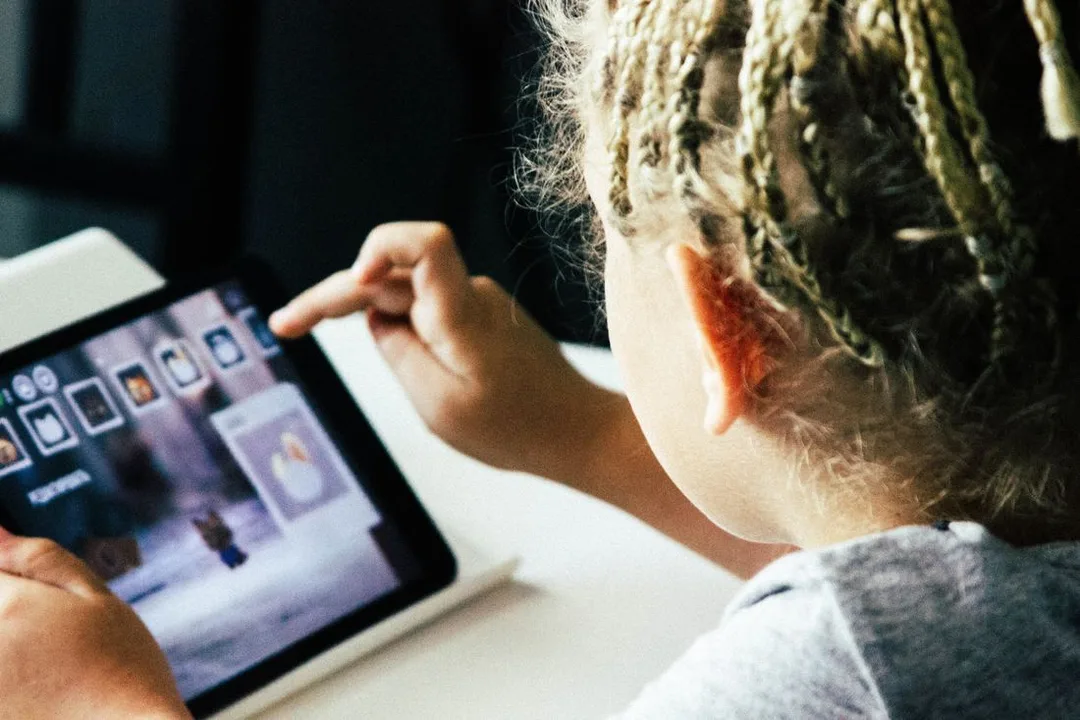
Most of the people actively parenting now have had a very different experience of computer technology in education and in the rest of our lives than our children are having. For many parents computer technology was introduced into their school and work lives at some point. We can remember the days before smart phones and constant internet access. Our children have none of these memories. For them technology simply exists and has always been part of their lives. For this reason, parents can sometimes feel that they lack the skills or knowledge to support their children to make good decisions about using technology.
It has been my experience as an educator that technology is a key part of student’s lives not only while they are in our classrooms but when they venture out into the world beyond school. Parents who are keen for their children to excel at school and in the world beyond school will naturally be looking for ways to support their children as they learn in this new and different world.
For an excellent example of the way that technology can be used to support education check out the Manaiakalani project website http://www.manaiakalani.org/. The project began in decile 1a schools in East Tamaki and has been intensively researched by the university of Auckland. They have been able to demonstrate some great outcomes with increases in learning but also in school engagement. This is particularly heartening as the children and families in the project come from a socio economically deprived area of Auckland. For a short and heart-warming video check out this clip of Will. i. am of the Black Eyed Peas fame when he comes to visit Point England School, https://vimeo.com/65790714. This is a true example of the power of being interconnected through technology. Technology can cut through socio economic, cultural, geographic and age barriers in a way that many other methods of communication are unable to.
Sometimes we as educators and parents can take the view that what children are doing on the internet is simply passive entertainment or information gathering. Much of what occurs on the internet is much more than that and requires us to actively participate in social relationships and in making meaning of information and even contributing information to the world in a way that was much more difficult before the invention of computers and the internet.
Our current world is saturated in information. In the 19th and for most of the 20th century teachers and educational institutions such as schools and university were holders and creators of information. The key job of primary and secondary schools was to impart as much of this information as possible while children attended school. In the 21st century the internet is the way that we access much of this information. All the information we could ever need is available on the internet. Arguably, one of the key roles of schools in the 21st century is to teach children how to make meaning of this information, how to access and judge the usefulness of the information and how to contribute to the available information in a useful way.
It has been my experience as an educator that technology is a key part of student’s lives not only while they are in our classrooms but when they venture out into the world beyond school. Parents who are keen for their children to excel at school and in the world beyond school will naturally be looking for ways to support their children as they learn in this new and different world.
For an excellent example of the way that technology can be used to support education check out the Manaiakalani project website http://www.manaiakalani.org/. The project began in decile 1a schools in East Tamaki and has been intensively researched by the university of Auckland. They have been able to demonstrate some great outcomes with increases in learning but also in school engagement. This is particularly heartening as the children and families in the project come from a socio economically deprived area of Auckland. For a short and heart-warming video check out this clip of Will. i. am of the Black Eyed Peas fame when he comes to visit Point England School, https://vimeo.com/65790714. This is a true example of the power of being interconnected through technology. Technology can cut through socio economic, cultural, geographic and age barriers in a way that many other methods of communication are unable to.
Sometimes we as educators and parents can take the view that what children are doing on the internet is simply passive entertainment or information gathering. Much of what occurs on the internet is much more than that and requires us to actively participate in social relationships and in making meaning of information and even contributing information to the world in a way that was much more difficult before the invention of computers and the internet.
Our current world is saturated in information. In the 19th and for most of the 20th century teachers and educational institutions such as schools and university were holders and creators of information. The key job of primary and secondary schools was to impart as much of this information as possible while children attended school. In the 21st century the internet is the way that we access much of this information. All the information we could ever need is available on the internet. Arguably, one of the key roles of schools in the 21st century is to teach children how to make meaning of this information, how to access and judge the usefulness of the information and how to contribute to the available information in a useful way.
- Published on

Transition is something that is on the minds of many parents and children currently. The end of the school year is racing towards us at a great rate. At times children and parents may both be feeling somewhat unsettled by the changes that the end of year signals. Strategies that will help at this time of the year are:
Validate the feelings your child may be having about the end of their time in their current educational setting. They should be able to celebrate what they have achieved and acknowledge that they may feel a little sad about leaving the familiar.
Give them as much knowledge and experience of their new setting as possible. Visits to their new educational setting, looking at websites and online images as well as talking about what might happen during their first days is helpful. If possible, during the school holidays taking a trip to the new school to allow your child to walk the grounds and play on the equipment in the playground will start to develop some familiarity for them.
Share your own experiences of managing changes in workplace or living places can be helpful. Make sure you emphasise the strategies you used to make things work well.
Both the Education Review Office and the Ministry of Education Research Division have some great research with a New Zealand schools focus to guide thinking about transition. Their findings suggest that rather than an event, transition is a process requiring students to make ongoing changes over an extended time as new challenges appear. Reassuringly for parents, by the end of their first year at secondary school most students in the studies reported many positive experiences at secondary school. They were making good academic gains and few when asked said they would rather return to primary or intermediate. Of interest is that it appears that for some students the second half of the year is a time that negative thoughts about High School appear rather than within the first few weeks.
Protective factors include ensuring that friendships are continued or established at the new school. Students who had friends transitioning to the same school benefited from this, but the new school environment also provided opportunities to make new friendships with a wider range of students. A sense of belonging through engaging in cultural and sporting activities was also a feature of successful transition along with the sense that teachers and school staff provided interesting and engaging lessons and demonstrated that they knew about and cared about their students.
How can parents help to ensure year 9, is a positive year that sets the scene for a successful secondary school career? Developmentally one of the key jobs of an adolescent is to begin to separate from their parents as they move towards adulthood. Parenting an adolescent is tricky as many of you will be aware already. It takes strategy. Keep in mind that at times your offers of help will be declined (possibly not very politely) just because your teen wants to be independent. Overall the best approach is to stay connected to the new school by attending any events that are open to parents such as meet and greets for new parents, parent teacher conferences, sporting events or other. Stay informed of what is happening at school by reading newsletters and school websites. Keep talking to your child about school when you can. Good times for talking are, in the car while you are driving them somewhere or while you are both engaged in a task together such as cooking or washing the car. If your child expresses any concerns, try a problem-solving approach. Generate a range of possible choices allowing your child to make the final choice for themselves. If you are concerned that things aren’t going well get in touch with school. Year level deans are usually responsible for the pastoral care of the children in their year level and will be interested in hearing from you.
Making the move to high school signals a time of change for both parents and children. Recognising this and adapting to the changes by using new strategies will help to make high school a time of positive learning and growth for parents and their children.
Validate the feelings your child may be having about the end of their time in their current educational setting. They should be able to celebrate what they have achieved and acknowledge that they may feel a little sad about leaving the familiar.
Give them as much knowledge and experience of their new setting as possible. Visits to their new educational setting, looking at websites and online images as well as talking about what might happen during their first days is helpful. If possible, during the school holidays taking a trip to the new school to allow your child to walk the grounds and play on the equipment in the playground will start to develop some familiarity for them.
Share your own experiences of managing changes in workplace or living places can be helpful. Make sure you emphasise the strategies you used to make things work well.
Both the Education Review Office and the Ministry of Education Research Division have some great research with a New Zealand schools focus to guide thinking about transition. Their findings suggest that rather than an event, transition is a process requiring students to make ongoing changes over an extended time as new challenges appear. Reassuringly for parents, by the end of their first year at secondary school most students in the studies reported many positive experiences at secondary school. They were making good academic gains and few when asked said they would rather return to primary or intermediate. Of interest is that it appears that for some students the second half of the year is a time that negative thoughts about High School appear rather than within the first few weeks.
Protective factors include ensuring that friendships are continued or established at the new school. Students who had friends transitioning to the same school benefited from this, but the new school environment also provided opportunities to make new friendships with a wider range of students. A sense of belonging through engaging in cultural and sporting activities was also a feature of successful transition along with the sense that teachers and school staff provided interesting and engaging lessons and demonstrated that they knew about and cared about their students.
How can parents help to ensure year 9, is a positive year that sets the scene for a successful secondary school career? Developmentally one of the key jobs of an adolescent is to begin to separate from their parents as they move towards adulthood. Parenting an adolescent is tricky as many of you will be aware already. It takes strategy. Keep in mind that at times your offers of help will be declined (possibly not very politely) just because your teen wants to be independent. Overall the best approach is to stay connected to the new school by attending any events that are open to parents such as meet and greets for new parents, parent teacher conferences, sporting events or other. Stay informed of what is happening at school by reading newsletters and school websites. Keep talking to your child about school when you can. Good times for talking are, in the car while you are driving them somewhere or while you are both engaged in a task together such as cooking or washing the car. If your child expresses any concerns, try a problem-solving approach. Generate a range of possible choices allowing your child to make the final choice for themselves. If you are concerned that things aren’t going well get in touch with school. Year level deans are usually responsible for the pastoral care of the children in their year level and will be interested in hearing from you.
Making the move to high school signals a time of change for both parents and children. Recognising this and adapting to the changes by using new strategies will help to make high school a time of positive learning and growth for parents and their children.
- Published on
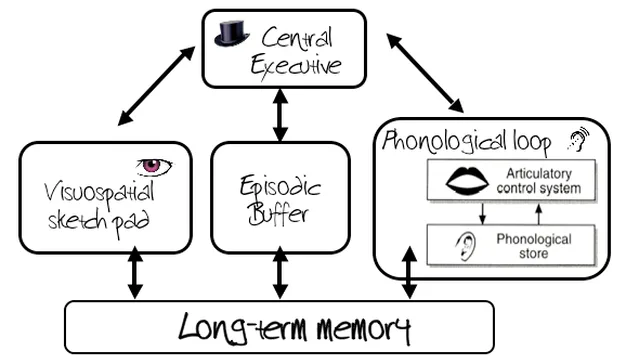
Working memory is a term I have heard teachers and parents mention recently. The first question really is what is working memory? Of note is that working memory is not a physical part of the brain. It is a model that provides a way for scientists to discuss and understand human function. The brain is very complex and multiple parts of the brain are implicated in the function we are calling working memory. The model is pictured with the Central Executive taking the role of the manager of lots of aspects of thinking including working memory, attention, reasoning, task flexibility, task solving, planning, and execution. The visuospatial sketch pad helps us to understand the world through visual perception and making meaning through vision. The Episodic Buffer is a combination of verbal and visual and tends to operate around highly memorable events. Phonological Loop provides understanding through language, hearing instructions, listening to music and talking to other people. As information is filtered through these processes and managed by the Central Executive it will eventually be stored in long term memory. This is when we can start to develop automaticity and fluency as we learn.
Attention has a big part to play in Working Memory. Interestingly there are two aspects to this. It is important that we can be inattentive to information that is not relevant to what we want to learn or in other words ignore distractions. The other aspect is of course being able to pay attention to something that is relevant to what we want to learn. Children who struggle with attention find that they struggle to filter out what is not important. For Working Memory to work well we need to be able to decide what to pay attention to and then actually pay attention to it. For parents and teachers figuring out who is paying attention can be difficult. It is hard to tell from the outside who is and isn’t paying attention. Attention requires considerable energy and paying close attention to a task can be extremely tiring.
So, what is happening when Working Memory fails? A great analogy is of post it notes. Everyone’s working memory is a different sized post it note but once you have filled the post it note with information the rest of the information just doesn’t fit. You or your child might have very large A3 sized post it notes while someone else may have a tiny post it note. Another analogy is of a coffee cup. Again, everyone has a different sized coffee cup but once the cup is full all the rest of the coffee will flow out of the top of the cup and be lost.
How can we help to support our Working Memory? The essentials are chunking information together, pacing information and rehearsal. Chunking means that instead of presenting information in single pieces we put them together. An example of this is the way we generally group numbers in a phone number together. A phone number might be presented as 021 515 2890 or in three chunks rather than 10 individual pieces of information. Ensuring that the pace of information is snappy, short and uses simple language. Rehearse information at least 4 times but some children with difficulty in this area may need between 10 -100 rehearsals. Have you ever gone out and then can’t remember if you locked the door? This is an example of working memory failing. In order to get around this you can say as you lock the door, I’ve looked the door up to 4 times so that you will be sure to remember.
Once you have the essentials in place there are some other additional things that help working memory. Ensure that the physical environment is well organised, and clutter is removed. A child with some difficulty with working memory may be able to recall your instructions to find their uniform shirt until they arrive at their room and then must search under the bed and in several different drawers. By the time they’ve done this they may well have forgotten what they were looking for. Look for eye contact or a physical signal that your child is listening (paying attention to what you are saying) when you ask them to do something. Make sure that your child has started on a task, once they get going, they are more likely to keep going but if you tell them to do something and their working memory has failed, they are unlikely to be able to start. Check that your child has the language to explain to you what they are experiencing. Sometimes children can become very frustrated because they don't’ know how to tell us that they don’t know how to do something, and they are experiencing an emotional reaction to it. Encouraging physical intense physical activity appears to provide stimulus to working memory. Provide opportunities for children to run around prior to them starting homework and they may well be able to produce better results.
As parents we can help our children to make the most of their working memories, some of the tips might help our working memories also.
Attention has a big part to play in Working Memory. Interestingly there are two aspects to this. It is important that we can be inattentive to information that is not relevant to what we want to learn or in other words ignore distractions. The other aspect is of course being able to pay attention to something that is relevant to what we want to learn. Children who struggle with attention find that they struggle to filter out what is not important. For Working Memory to work well we need to be able to decide what to pay attention to and then actually pay attention to it. For parents and teachers figuring out who is paying attention can be difficult. It is hard to tell from the outside who is and isn’t paying attention. Attention requires considerable energy and paying close attention to a task can be extremely tiring.
So, what is happening when Working Memory fails? A great analogy is of post it notes. Everyone’s working memory is a different sized post it note but once you have filled the post it note with information the rest of the information just doesn’t fit. You or your child might have very large A3 sized post it notes while someone else may have a tiny post it note. Another analogy is of a coffee cup. Again, everyone has a different sized coffee cup but once the cup is full all the rest of the coffee will flow out of the top of the cup and be lost.
How can we help to support our Working Memory? The essentials are chunking information together, pacing information and rehearsal. Chunking means that instead of presenting information in single pieces we put them together. An example of this is the way we generally group numbers in a phone number together. A phone number might be presented as 021 515 2890 or in three chunks rather than 10 individual pieces of information. Ensuring that the pace of information is snappy, short and uses simple language. Rehearse information at least 4 times but some children with difficulty in this area may need between 10 -100 rehearsals. Have you ever gone out and then can’t remember if you locked the door? This is an example of working memory failing. In order to get around this you can say as you lock the door, I’ve looked the door up to 4 times so that you will be sure to remember.
Once you have the essentials in place there are some other additional things that help working memory. Ensure that the physical environment is well organised, and clutter is removed. A child with some difficulty with working memory may be able to recall your instructions to find their uniform shirt until they arrive at their room and then must search under the bed and in several different drawers. By the time they’ve done this they may well have forgotten what they were looking for. Look for eye contact or a physical signal that your child is listening (paying attention to what you are saying) when you ask them to do something. Make sure that your child has started on a task, once they get going, they are more likely to keep going but if you tell them to do something and their working memory has failed, they are unlikely to be able to start. Check that your child has the language to explain to you what they are experiencing. Sometimes children can become very frustrated because they don't’ know how to tell us that they don’t know how to do something, and they are experiencing an emotional reaction to it. Encouraging physical intense physical activity appears to provide stimulus to working memory. Provide opportunities for children to run around prior to them starting homework and they may well be able to produce better results.
As parents we can help our children to make the most of their working memories, some of the tips might help our working memories also.
- Published on

Last week I talked about taking the pressure off your child if they are taking a little longer to acquire automaticity with reading, writing and arithmetic. This week I’d like to share some strategies that I’ve used when teaching children who are struggling to get to automaticity in some aspects of their learning. Many of the ideas are very simple and you may have tried them previously. The key is to select an approach, give it a go, if your child enjoys it and you find it doable then keep going with it for a while. Once you and your child have had enough of it, select another approach.
One of the most debunked but continually perpetuated myths about learning is that people have a learning style. I continue to run into people who talk about a child’s learning style. The research in this area is very consistent in its findings that people do not have a learning style which dominates compared to any other learning style. For more information and links to research check out this link from Yale University Centre for Teaching and Learning, https://ctl.yale.edu/LearningStylesMyth
What is true is that when we learn we need to be presented materials in a range of different ways so that it makes sense to us. We can’t predict accurately which way is going to work for everyone at a specific time, given their developmental and ability levels. Therefore, it is ideal to present information in a variety of ways. Anyone trying to learn something new should be given the opportunity to engage with this learning in different ways. So, pick something that appeals to you and your child and give it a go.
The kinds of things that are often best learned using the following strategies tend to be things like sound to letter correlation, or the understanding that a symbol such as A can sound like a as in apple or a as in paste, simple recognition of the name of a symbol such as the alphabet or numbers or symbols for mathematical operations such as + and - or basic maths facts.
Tips to ensure success and a fun (pain free) session:
Tip 1 limit the number of items to be learned. For example, if you are learning spelling words just start with 3 words. Once your child is confident with these then add in one or two new words, keeping the known words. This approach means that your child gets to quickly experience success and a sense of mastery from which they can build new learning.
Tip 2 choose a ‘good’ time. I know it’s hard to think about what a good time might be. My first option would be to ask your child when they would like to do this work. Driving in the car or walking somewhere together or while you are waiting for another activity to begin are all options.
Tip 3 be regular about sessions. Every day is ideal.
Tip 4 keep the sessions short and upbeat. A couple of minutes up to about 5 minutes is probably enough if the sessions happen daily.
Resources that might be helpful:
Flash cards, cards with individual pieces of information on them. This could be an alphabet letter or a number or a word. Flash cards can easily be created at home using sturdy card and a marker pen or you can purchase them.
Magnets on the fridge (or another magnet suitable surface). These can be purchased from two-dollar shops or the Warehouse and are usually in individual letter or number form.
Word or number rings, small numbers of words, letters or numbers threaded onto a small metal ring.
This kind of learning can also be done without any resources at all, through using body movements, to help with learning.
Smart chutes, https://www.smartkids.co.nz/collections/smart-chute. These are somewhat pricey so may not be ideal for everyone. A range of cards can be purchased ready made with high frequency words, basic facts, colours etc. I have also made my own cards which work just fine.
Play dough or other modelling clay
Crayons, paints, pens of various colours and thicknesses, paper
Let’s start with the no resource ideas. To keep things simple, I’ll just refer to one kind of learning, but most strategies could be used for either numeracy or literacy activities.
No resources required:
Ask your child to write out their spelling words, on the carpet or the wall, back of the car seat in front of them (any textured surface) using their finger. Sounding the words out at the same time.
Ask your child to spell out their words in the air using their finger. This can be done in the car while you are travelling to and from school or activities. If this approach seems to be working you could add in a tray of sand, salt, flour or any other textured material you can think of and ask your child to spell out their words in this material while saying the words aloud.
Once it turns dark you can use a flashlight to spell the words out on a wall or in the air.
When the weather is nice, and you can go outside, use a paint brush and a bowl of water to paint the words on concrete.
Minimal resources required:
Competition can sometimes keep children engaged in this kind of learning. If your child is learning to recognise high frequency words (check with your child’s school for a list of high frequency words) or basic maths facts, you can set up a table and time your child to see how quickly they can read their words or complete their basic maths facts. Children can compete against their own times or against a parent. This should be done with care to ensure that the child is experiencing success. I’d only try this once the child knows the information but perhaps needs to keep revisiting it so that they maintain their fluency. For example, if a child is learning basic facts and they know their doubles up to 10 (two times table) I’d perhaps start using the competition to maintain knowledge of doubles and increase fluency. I’d then begin teaching the three times table by having a ring of three problems that we went through daily adding one more problem once the child is competent with the first three.
Flash Cards:
Put the cards into a bag, take a word/problem/letter out and say it as quickly as possible.
Hide the cards around the house to create a treasure hunt. As each card is found read it out/solve the problem.
Hide the cards outside (on a fine day) to create a treasure hunt. As each card is found read it out/solve the problem.
Lay the cards out on the floor and encourage your child to jump from card to card reading it out/solving the problem.
Use the cards to create words. Often this will involve cards with alphabet letters on them create a selection of vowel letters (aeiou) and consonants so that children can create consonant vowel consonant pattern words. These are typically, cat, sat, mat and so on.
Lay the cards out on the floor and throw a bean bag or other on top of a card. Read the card aloud/solve the problem.
As your child reads the word on the card a loud ask them to trace their finger over the letters.
Lay the flash cards out on a flat surface with the words facing down. Ask your child to turn them over one at a time reading the words as they turn them over.
Magnetic letters or numbers:
Point to letters and ask your child to name them or produce their sound - recognising that some have more than one sound.
Ask your child to group them into words
Ask your child to create words and then exchange letters to create a new word. For example, ask your child to create sat then take the s away and ask them to make a new word such as cat.
Playdough or other modelling clay:
Ask your child to make letters using the dough or clay.
Join the letters together to make words.
Ask your child to create shapes to illustrate what they are learning
Flatten the dough and use a satay stick or toothpick to inscribe the dough with letters or words.
Word rings:
Select a few items to be learned, write them on sturdy card and attach to a split ring.
Use in a similar way to flash cards adding items to the ring as your child reaches competency with the first ones.
Word rings can be very useful when teaching basic facts, add enough cards to create one basic fact then add more so that the child can create more. For example, if you create a ring with a 1 card a 2 card and a 3 card you can ask your child what is 1+2 or what is 2+1 or what is 1+3 or 3+2.
Smart chutes:
Smart chutes are tubes with a lot at the top and bottom the child posts a card into the top slot and inside the chute the card is flipped and comes out the bottom slot upside down. The cards are marked on both sides. For example, a child posts a card showing 3+2 in the top and then it comes out the bottom showing 5. There is enough of a delay for the child to say the correct answer.
Crayons, paints, pens with a variety of colours and widths:
These provide the opportunity for children to be creative and choose different types of medium to write their words.
I hope you can find one or two ideas from this list to help you to support your child to become fluent in their knowledge of spelling words, letter knowledge, high frequency words, maths problems or symbols. If you have some ideas, I haven’t mentioned please share them in the comments section.
One of the most debunked but continually perpetuated myths about learning is that people have a learning style. I continue to run into people who talk about a child’s learning style. The research in this area is very consistent in its findings that people do not have a learning style which dominates compared to any other learning style. For more information and links to research check out this link from Yale University Centre for Teaching and Learning, https://ctl.yale.edu/LearningStylesMyth
What is true is that when we learn we need to be presented materials in a range of different ways so that it makes sense to us. We can’t predict accurately which way is going to work for everyone at a specific time, given their developmental and ability levels. Therefore, it is ideal to present information in a variety of ways. Anyone trying to learn something new should be given the opportunity to engage with this learning in different ways. So, pick something that appeals to you and your child and give it a go.
The kinds of things that are often best learned using the following strategies tend to be things like sound to letter correlation, or the understanding that a symbol such as A can sound like a as in apple or a as in paste, simple recognition of the name of a symbol such as the alphabet or numbers or symbols for mathematical operations such as + and - or basic maths facts.
Tips to ensure success and a fun (pain free) session:
Tip 1 limit the number of items to be learned. For example, if you are learning spelling words just start with 3 words. Once your child is confident with these then add in one or two new words, keeping the known words. This approach means that your child gets to quickly experience success and a sense of mastery from which they can build new learning.
Tip 2 choose a ‘good’ time. I know it’s hard to think about what a good time might be. My first option would be to ask your child when they would like to do this work. Driving in the car or walking somewhere together or while you are waiting for another activity to begin are all options.
Tip 3 be regular about sessions. Every day is ideal.
Tip 4 keep the sessions short and upbeat. A couple of minutes up to about 5 minutes is probably enough if the sessions happen daily.
Resources that might be helpful:
Flash cards, cards with individual pieces of information on them. This could be an alphabet letter or a number or a word. Flash cards can easily be created at home using sturdy card and a marker pen or you can purchase them.
Magnets on the fridge (or another magnet suitable surface). These can be purchased from two-dollar shops or the Warehouse and are usually in individual letter or number form.
Word or number rings, small numbers of words, letters or numbers threaded onto a small metal ring.
This kind of learning can also be done without any resources at all, through using body movements, to help with learning.
Smart chutes, https://www.smartkids.co.nz/collections/smart-chute. These are somewhat pricey so may not be ideal for everyone. A range of cards can be purchased ready made with high frequency words, basic facts, colours etc. I have also made my own cards which work just fine.
Play dough or other modelling clay
Crayons, paints, pens of various colours and thicknesses, paper
Let’s start with the no resource ideas. To keep things simple, I’ll just refer to one kind of learning, but most strategies could be used for either numeracy or literacy activities.
No resources required:
Ask your child to write out their spelling words, on the carpet or the wall, back of the car seat in front of them (any textured surface) using their finger. Sounding the words out at the same time.
Ask your child to spell out their words in the air using their finger. This can be done in the car while you are travelling to and from school or activities. If this approach seems to be working you could add in a tray of sand, salt, flour or any other textured material you can think of and ask your child to spell out their words in this material while saying the words aloud.
Once it turns dark you can use a flashlight to spell the words out on a wall or in the air.
When the weather is nice, and you can go outside, use a paint brush and a bowl of water to paint the words on concrete.
Minimal resources required:
Competition can sometimes keep children engaged in this kind of learning. If your child is learning to recognise high frequency words (check with your child’s school for a list of high frequency words) or basic maths facts, you can set up a table and time your child to see how quickly they can read their words or complete their basic maths facts. Children can compete against their own times or against a parent. This should be done with care to ensure that the child is experiencing success. I’d only try this once the child knows the information but perhaps needs to keep revisiting it so that they maintain their fluency. For example, if a child is learning basic facts and they know their doubles up to 10 (two times table) I’d perhaps start using the competition to maintain knowledge of doubles and increase fluency. I’d then begin teaching the three times table by having a ring of three problems that we went through daily adding one more problem once the child is competent with the first three.
Flash Cards:
Put the cards into a bag, take a word/problem/letter out and say it as quickly as possible.
Hide the cards around the house to create a treasure hunt. As each card is found read it out/solve the problem.
Hide the cards outside (on a fine day) to create a treasure hunt. As each card is found read it out/solve the problem.
Lay the cards out on the floor and encourage your child to jump from card to card reading it out/solving the problem.
Use the cards to create words. Often this will involve cards with alphabet letters on them create a selection of vowel letters (aeiou) and consonants so that children can create consonant vowel consonant pattern words. These are typically, cat, sat, mat and so on.
Lay the cards out on the floor and throw a bean bag or other on top of a card. Read the card aloud/solve the problem.
As your child reads the word on the card a loud ask them to trace their finger over the letters.
Lay the flash cards out on a flat surface with the words facing down. Ask your child to turn them over one at a time reading the words as they turn them over.
Magnetic letters or numbers:
Point to letters and ask your child to name them or produce their sound - recognising that some have more than one sound.
Ask your child to group them into words
Ask your child to create words and then exchange letters to create a new word. For example, ask your child to create sat then take the s away and ask them to make a new word such as cat.
Playdough or other modelling clay:
Ask your child to make letters using the dough or clay.
Join the letters together to make words.
Ask your child to create shapes to illustrate what they are learning
Flatten the dough and use a satay stick or toothpick to inscribe the dough with letters or words.
Word rings:
Select a few items to be learned, write them on sturdy card and attach to a split ring.
Use in a similar way to flash cards adding items to the ring as your child reaches competency with the first ones.
Word rings can be very useful when teaching basic facts, add enough cards to create one basic fact then add more so that the child can create more. For example, if you create a ring with a 1 card a 2 card and a 3 card you can ask your child what is 1+2 or what is 2+1 or what is 1+3 or 3+2.
Smart chutes:
Smart chutes are tubes with a lot at the top and bottom the child posts a card into the top slot and inside the chute the card is flipped and comes out the bottom slot upside down. The cards are marked on both sides. For example, a child posts a card showing 3+2 in the top and then it comes out the bottom showing 5. There is enough of a delay for the child to say the correct answer.
Crayons, paints, pens with a variety of colours and widths:
These provide the opportunity for children to be creative and choose different types of medium to write their words.
I hope you can find one or two ideas from this list to help you to support your child to become fluent in their knowledge of spelling words, letter knowledge, high frequency words, maths problems or symbols. If you have some ideas, I haven’t mentioned please share them in the comments section.
- Published on
As adults most of us have had the experience of doing something without really thinking about it. We drive a car, read, talk and complete simple daily tasks like brushing our teeth without having to think through each step. If asked we’d find it quite difficult to think through all the separate component parts of many tasks to explain step by step exactly what we are doing. One step beyond knowing something is becoming fluent in applying that knowledge. Again, if we think about daily tasks there are some that although we know how to do them it might take us a bit longer to get them done. You may know how to drive a car and you are fluent when driving from home to work, if you are asked to drive to a new destination or undertake an unfamiliar manoeuvre, such as backing a trailer you might take a bit longer. You may need to think ahead a bit more about how you are going to perform the task. During the task you may have to think step by step what you are doing.
Children learn to read, write and do arithmetic moving through these stages of being complete novices needing to learn every component of a skill step by step to knowing the skill to becoming fluent in applying skills. What’s useful about a skill becoming automatic is that it leaves our brains free to do something more than just apply the skill in the same way. When children become fluent readers, able to automatically read text, they then begin to learn from what they are reading. When they can write automatically they can begin to create interesting and useful text. When they become automatic in their understanding of number and arithmetic they can start to learn about how to apply this knowledge to develop further understanding of the world using mathematical concepts to help them.
Sometimes children get stuck or take a bit longer to acquire the required level of automaticity compared to their peers. This can be a huge pressure for parents and students. For some thinking about the idea of how this might be playing out in our modern education have a look at this Ted talk from Sir Ken Robinson in which he discusses some of the challenges facing modern education systems. The talk is about 11 minutes long and is very entertaining. It’s worth a look if you haven’t seen it. It was posted in 2010 and in my opinion much of what is happening in education in New Zealand is already reflective of a different way of thinking.
https://www.ted.com/talks/ken_robinson_changing_education_paradigms
As Sir Ken points out children are going through the school system in batches based on their ages. As any psychologist, parent or educator knows children all develop skills at different ages and stages. We have broad guidelines which help us to understand when we might look for certain skills to develop but the bands in which children develop these skills are wide. If you have a look at the New Zealand Curriculum you will see that children are expected to develop skills across several years in each curriculum level. The skills children are developing in level one of the curriculum level start to be developed in year one, continue through year 2 and year three and tail off in the beginning of year 4.
My first key message to you and your child is that if they are not developing the skills at the same time as their peers they might just need to take a little more time. Developmentally they may not be ready to acquire the skills. Your child is special and unique and as adults we need to remind them and ourselves of this. Take the pressure off the situation by acknowledging that everyone learns at a different pace. I’m not suggesting abandoning the learning process but instead removing the expectation that all children are the same should be expected to go through the same teaching and learning process and come out with the same result. Every child will need an individual approach. Sometimes this is very subtle and sometimes a bit more explicit. Next week I have some suggestions for helping to keep the learning process fun when it ends up taking a bit longer.
Children learn to read, write and do arithmetic moving through these stages of being complete novices needing to learn every component of a skill step by step to knowing the skill to becoming fluent in applying skills. What’s useful about a skill becoming automatic is that it leaves our brains free to do something more than just apply the skill in the same way. When children become fluent readers, able to automatically read text, they then begin to learn from what they are reading. When they can write automatically they can begin to create interesting and useful text. When they become automatic in their understanding of number and arithmetic they can start to learn about how to apply this knowledge to develop further understanding of the world using mathematical concepts to help them.
Sometimes children get stuck or take a bit longer to acquire the required level of automaticity compared to their peers. This can be a huge pressure for parents and students. For some thinking about the idea of how this might be playing out in our modern education have a look at this Ted talk from Sir Ken Robinson in which he discusses some of the challenges facing modern education systems. The talk is about 11 minutes long and is very entertaining. It’s worth a look if you haven’t seen it. It was posted in 2010 and in my opinion much of what is happening in education in New Zealand is already reflective of a different way of thinking.
https://www.ted.com/talks/ken_robinson_changing_education_paradigms
As Sir Ken points out children are going through the school system in batches based on their ages. As any psychologist, parent or educator knows children all develop skills at different ages and stages. We have broad guidelines which help us to understand when we might look for certain skills to develop but the bands in which children develop these skills are wide. If you have a look at the New Zealand Curriculum you will see that children are expected to develop skills across several years in each curriculum level. The skills children are developing in level one of the curriculum level start to be developed in year one, continue through year 2 and year three and tail off in the beginning of year 4.
My first key message to you and your child is that if they are not developing the skills at the same time as their peers they might just need to take a little more time. Developmentally they may not be ready to acquire the skills. Your child is special and unique and as adults we need to remind them and ourselves of this. Take the pressure off the situation by acknowledging that everyone learns at a different pace. I’m not suggesting abandoning the learning process but instead removing the expectation that all children are the same should be expected to go through the same teaching and learning process and come out with the same result. Every child will need an individual approach. Sometimes this is very subtle and sometimes a bit more explicit. Next week I have some suggestions for helping to keep the learning process fun when it ends up taking a bit longer.
- Published on

A common concern that pushes parents to seek the help of an educational psychologist is that their child is not learning to read as quickly as other children. The work I can do one to one with a child, helping to understand why it might be that they are not progressing, is highly individualised. The interventions I suggest are tailored exactly to the needs of the individual. Having said that there are some things which all parents can do which will set their children up to develop reading skills even if they are currently struggling.
In a 2010 longitudinal study from the university of Nevada in Reno, the authors reported that one of the strongest predictors for educational achievement is the number of books parents have in the home. The researchers in this case were particularly interested in educational attainment and length of time children remained in education. What is interesting about this study is that parents who owned large numbers of books were in effect modelling or showing their children that they valued learning. One of the key things you can do as a parent to encourage your children to become good readers is to read yourself.
This can be a bit tricky if you are not keen on reading. If this is the case for you, think widely about what you read. It is rare in our current world for us not to read at some point in the day. We read emails, texts and information on social media. The accessibility of information via technology has created avenues for reading that were not present in prior times. If you don’t read novels there are non-fiction texts, magazines, newspapers and so on. As you read make sure you share some of the information you are gathering with your children. This will create important links for children to understand that the times when we are sitting quietly reading we are in fact gathering information and making meaning of our world and sometimes just having fun. Our children learn a great deal from their parents’ actions and words.
One of my children was a reluctant reader to start with and slow to get going with reading at school. We had recently purchased a Sing star (for the PS4) for family entertainment and soon realised our son was struggling to sing along as he couldn’t read the words quickly enough to keep up. He was very keen to be part of the family action and very quickly his reading sped up and his reading levels at school increased very quickly also. He saw that we as a family valued the ability to read efficiently and he wanted to be part of the family fun so applied himself to his reading skills. Please note that this is simply anecdotal and I’m not recommending that Sing Star teaches your child reading. I do mean keep your eyes open for opportunities for your child to find the motivation to read and give them lots of praise and support for their endeavours.
One of my favourite books to recommend for parents trying to encourage their children to read is, The Reading Bug and how you can help your child to catch it, written by Paul Jennings, published by Penguin Books. Paul writes in a down to earth style and has lots of practical suggestions for children of different ages. One of his key messages is to keep it fun. He emphasizes the importance of reading to children. Beginning when children are very young with reading to them creates that link between the written word and the wonderful time spent with parents and caregivers. It also creates a clear message that parents, and caregivers value the written word and are prepared to prioritise time for reading. Another option for those times when parents just can’t read with their child is a recording of a book being read. MP3 files of books can be downloaded from the local library.
Sometimes it is just a matter of finding the kind of books your child is interested in. Your local library will have staff who can advise you on what is popular with the various ages and stages and speciality book shops often have excellent staff who can recommend great books. Time Out Books in Mt Eden has a fabulous children’s section and a dedicated staff member who is an expert in children’s literature. Be open to a range of possible reading sources, think about recipe books, Ripley's Believe It or Not Guinness Book of World Records, technical manuals, comic books, graphic novels, websites all of these are suitable reading material for children and young people. It’s their choice (with a parent’s guidance for age appropriateness).
Check out books that come in series such as The Pony Club Secrets or The Magic Treehouse. These are fantastic for young or reluctant readers. The books tend to have the same characters and follow the same pattern with the plot. This is helpful as there is less new vocabulary for a child to learn. Children who are struggling with reading will be able to more fully concentrate on any new aspects of the book as they already know the basic setup. There are a huge number of these series available and there is something for children of all ages. On that note it’s great to ask some advice about what is suitable for what ages. Although your child might be able to read the text of a book they may not be emotionally ready for the content. Another reason for choosing books which are suitable for the age of your child is that with so much fantastic literature available to us why would we want them to miss out on the things that are suitable for their age. As they grow up they will be able to discover a wider range of literature, but it isn’t that often that children/people will go back and read books pitched at a younger age. So, relax and enjoy your/your child’s time with Good Night Moon, because before you know it will be time for The Magic Treehouse, and then Harry Potter and beyond.
In case you are interested in the study, here’s the reference: M.D.R. Evans, Jonathan Kelley, Joanna Sikora, Donald J. Treiman. Family scholarly culture and educational success: Books and schooling in 27 nations. Research in Social Stratification and Mobility, 2010
In a 2010 longitudinal study from the university of Nevada in Reno, the authors reported that one of the strongest predictors for educational achievement is the number of books parents have in the home. The researchers in this case were particularly interested in educational attainment and length of time children remained in education. What is interesting about this study is that parents who owned large numbers of books were in effect modelling or showing their children that they valued learning. One of the key things you can do as a parent to encourage your children to become good readers is to read yourself.
This can be a bit tricky if you are not keen on reading. If this is the case for you, think widely about what you read. It is rare in our current world for us not to read at some point in the day. We read emails, texts and information on social media. The accessibility of information via technology has created avenues for reading that were not present in prior times. If you don’t read novels there are non-fiction texts, magazines, newspapers and so on. As you read make sure you share some of the information you are gathering with your children. This will create important links for children to understand that the times when we are sitting quietly reading we are in fact gathering information and making meaning of our world and sometimes just having fun. Our children learn a great deal from their parents’ actions and words.
One of my children was a reluctant reader to start with and slow to get going with reading at school. We had recently purchased a Sing star (for the PS4) for family entertainment and soon realised our son was struggling to sing along as he couldn’t read the words quickly enough to keep up. He was very keen to be part of the family action and very quickly his reading sped up and his reading levels at school increased very quickly also. He saw that we as a family valued the ability to read efficiently and he wanted to be part of the family fun so applied himself to his reading skills. Please note that this is simply anecdotal and I’m not recommending that Sing Star teaches your child reading. I do mean keep your eyes open for opportunities for your child to find the motivation to read and give them lots of praise and support for their endeavours.
One of my favourite books to recommend for parents trying to encourage their children to read is, The Reading Bug and how you can help your child to catch it, written by Paul Jennings, published by Penguin Books. Paul writes in a down to earth style and has lots of practical suggestions for children of different ages. One of his key messages is to keep it fun. He emphasizes the importance of reading to children. Beginning when children are very young with reading to them creates that link between the written word and the wonderful time spent with parents and caregivers. It also creates a clear message that parents, and caregivers value the written word and are prepared to prioritise time for reading. Another option for those times when parents just can’t read with their child is a recording of a book being read. MP3 files of books can be downloaded from the local library.
Sometimes it is just a matter of finding the kind of books your child is interested in. Your local library will have staff who can advise you on what is popular with the various ages and stages and speciality book shops often have excellent staff who can recommend great books. Time Out Books in Mt Eden has a fabulous children’s section and a dedicated staff member who is an expert in children’s literature. Be open to a range of possible reading sources, think about recipe books, Ripley's Believe It or Not Guinness Book of World Records, technical manuals, comic books, graphic novels, websites all of these are suitable reading material for children and young people. It’s their choice (with a parent’s guidance for age appropriateness).
Check out books that come in series such as The Pony Club Secrets or The Magic Treehouse. These are fantastic for young or reluctant readers. The books tend to have the same characters and follow the same pattern with the plot. This is helpful as there is less new vocabulary for a child to learn. Children who are struggling with reading will be able to more fully concentrate on any new aspects of the book as they already know the basic setup. There are a huge number of these series available and there is something for children of all ages. On that note it’s great to ask some advice about what is suitable for what ages. Although your child might be able to read the text of a book they may not be emotionally ready for the content. Another reason for choosing books which are suitable for the age of your child is that with so much fantastic literature available to us why would we want them to miss out on the things that are suitable for their age. As they grow up they will be able to discover a wider range of literature, but it isn’t that often that children/people will go back and read books pitched at a younger age. So, relax and enjoy your/your child’s time with Good Night Moon, because before you know it will be time for The Magic Treehouse, and then Harry Potter and beyond.
In case you are interested in the study, here’s the reference: M.D.R. Evans, Jonathan Kelley, Joanna Sikora, Donald J. Treiman. Family scholarly culture and educational success: Books and schooling in 27 nations. Research in Social Stratification and Mobility, 2010
- Published on
Being told that your child is learning differently from his or her peers or that they may meet criteria for diagnosis such as Autistic Spectrum Disorder or Attention Deficit Disorder can be challenging for parents to hear. As parents we all want to protect our children from the harsh realities of the world, we want them to do well at school and in life. We may need to take time to grieve this loss of the what we thought of as the ideal child. But what other strategies can we use to cope with the news that we may not have wanted to hear?
A wonderful resource that I came across many years ago when I was working on my Masters degree is an essay written by Emily Perl Kingsley in 1987. Emily is an author, social activist and mother of actor Jason Kingsley who was born with Down Syndrome. Jason has had a successful career as an actor. For the full text of the essay check out this link: http://www.our-kids.org/Archives/Holland.html. In Welcome to Holland, Emily Kingsley is talking about the emotional experience of being told your have a child who is different. She points out that this is not all bad news. Emily doesn’t gloss over the fact that it can be shocking to be told that things might be different for your child and that there is a sense of grief and loss which may reoccur. I would support this approach. It’s important to acknowledge that at times as a parent you might feel sad about the loss of this ideal child and that this is OK. But it’s equally important to look forward to the unique things that your child will bring into your life - because they are different.
This essay was written in 1987, more than 30 years ago. In the past 30 years the landscape of education has changed significantly. When I first applied for a teaching job in special education I remember being asked my opinion of this new idea about inclusion. It was as if the school might take it or leave it. Now we take inclusion as a given and educators are continually looking for ways to embrace diversity. Teachers work to ensure that all children no matter what their needs are catered for in mainstream classrooms. The work of the specialist services such as Resource Teachers of Learning and Behaviour and Ministry of Education are targeted towards ensuring children are able to thrive in their local school. The Teachers Council of Aotearoa is revamping its guidelines for initial training of pre service teachers and I noted with delight that a bigger focus in the new guidelines is on teaching children with additional needs. There is much to be positive about in education for children with additional needs.
If you have been told that your child is different from some other children of the same age keep focused on the child that you know and love. Their strengths have not changed. Use the diagnosis to help you and those who teach and interact with your child understand how best to provide the conditions in which they can thrive. Share the possibilities that your child represents and engage the resources necessary to allow them to progress and achieve their goals. Make sure that everyone including your child knows that ‘Holland’ is a pretty special place even though it might be a bit different from ‘Italy’.
A wonderful resource that I came across many years ago when I was working on my Masters degree is an essay written by Emily Perl Kingsley in 1987. Emily is an author, social activist and mother of actor Jason Kingsley who was born with Down Syndrome. Jason has had a successful career as an actor. For the full text of the essay check out this link: http://www.our-kids.org/Archives/Holland.html. In Welcome to Holland, Emily Kingsley is talking about the emotional experience of being told your have a child who is different. She points out that this is not all bad news. Emily doesn’t gloss over the fact that it can be shocking to be told that things might be different for your child and that there is a sense of grief and loss which may reoccur. I would support this approach. It’s important to acknowledge that at times as a parent you might feel sad about the loss of this ideal child and that this is OK. But it’s equally important to look forward to the unique things that your child will bring into your life - because they are different.
This essay was written in 1987, more than 30 years ago. In the past 30 years the landscape of education has changed significantly. When I first applied for a teaching job in special education I remember being asked my opinion of this new idea about inclusion. It was as if the school might take it or leave it. Now we take inclusion as a given and educators are continually looking for ways to embrace diversity. Teachers work to ensure that all children no matter what their needs are catered for in mainstream classrooms. The work of the specialist services such as Resource Teachers of Learning and Behaviour and Ministry of Education are targeted towards ensuring children are able to thrive in their local school. The Teachers Council of Aotearoa is revamping its guidelines for initial training of pre service teachers and I noted with delight that a bigger focus in the new guidelines is on teaching children with additional needs. There is much to be positive about in education for children with additional needs.
If you have been told that your child is different from some other children of the same age keep focused on the child that you know and love. Their strengths have not changed. Use the diagnosis to help you and those who teach and interact with your child understand how best to provide the conditions in which they can thrive. Share the possibilities that your child represents and engage the resources necessary to allow them to progress and achieve their goals. Make sure that everyone including your child knows that ‘Holland’ is a pretty special place even though it might be a bit different from ‘Italy’.
- Published on

Many students will be facing end of year exams soon. Parents are often left wondering how to provide useful advice to their children in this situation. It’s often a while since we have faced exams ourselves and not all of us have the best strategies to share. This can cause stress and conflict between parents and children.
There are some basic ideas which schools often share such as, ensuring your child has a good night’s sleep prior to the exam, has eaten well and is well hydrated, has a quiet and well set up space for study all of which is very useful. I have been delving into some research about effective studying and have some tips to share with you. Armed with some solid information to share with your child, hopefully, you can make this a less stressful time for you and them. References are at the bottom of the blog.
Ensure that the obvious things are covered. Pay attention in class, go to class, do the reading, don’t put off studying, study in a quiet place, avoid distractions during class (including digital distractions) ask questions if you are confused. Doing these things will ensure you are set up well to go into exam prep time.
Let’s deal with one of the biggest myths out there, Learning Styles. There is no such thing as a preferred learning style so no need to stress about trying to figure out which learning style your child has and how to ensure they are learning this way. Research has demonstrated that learning style doesn’t impact outcomes in the least. Playing music to help with study is another common myth, thanks to John Hattie and Gregory Yates for providing information on busting this myth in Visible Learning and the Science of How We Learn. Research has demonstrated that music does not improve learning outcomes and in fact when attempting to focus on learning, music serves as a distraction.
Learning is hard work, if it seems too easy then it’s very likely that either this isn’t new information, or you aren’t learning anything. One of the best ways to figure out whether you are learning something new is if you are mentally sweating. If you are finding your study easy (too easy) think about what crutches you might have in place. Are you only studying the easy parts? Are you keeping your notes in front or you? Are you Googling when you aren’t confident of an answer? Take all these crutches away and then see how you go. If it’s still easy and you can honestly say you don't have any crutches, then it’s likely you know the information but otherwise read on for ways to ensure you do know the material and can produce it under exam conditions.
Spacing is a key tool when understanding how to make exam prep useful. This means that you should study information, take a break of at least a day, and then go over the information again. Forgetting is good for learning. When you space your learning sessions you have a chance to forget and then learning it again or retrieving it from memory helps us to remember in the long term.
Test yourself as you are studying. There are two purposes here, 1, this technique will help with retrieving information from your memory and 2, this strategy will help you to understand your strengths and weaknesses or what you do and don’t know. Apply the spacing rule here too. Review the information in study session one and then test yourself on the second study session. Use questions from old exam papers or from the back of textbooks to help with this process.
Summarise information after a class or completing a reading or reviewing notes. This helps to organise the information in your mind and helps to develop your memory of the information. A great way of doing this is by teaching the material to someone else (mum and dad or siblings could be great students). The key to this being an effective strategy is that you retrieve the information you are teaching from memory rather than reading from notes or a textbook while you are teaching the information.
Armed with information about proven strategies you can head into the exam season confident that you know how to support your child. I wish everyone all the best of luck with their end of year exams.
John Hattie and Gregory Yates, (2014), Visible Learning and the Science of How We Learn
Rorer, D. & Pashler, H. (2007). Increasing retention time without increasing study time. Current Directions in Psychological Science, 16, 183-186.
Aloysius Wei Lun Koh, Sze, Chi Lee, Stephen Wee Hun Lim. (2018) The learning benefits of teaching: A retrieval practice hypothesis, Applied Cognitive Psychology, Volume 32, Issue 3, 401-410
There are some basic ideas which schools often share such as, ensuring your child has a good night’s sleep prior to the exam, has eaten well and is well hydrated, has a quiet and well set up space for study all of which is very useful. I have been delving into some research about effective studying and have some tips to share with you. Armed with some solid information to share with your child, hopefully, you can make this a less stressful time for you and them. References are at the bottom of the blog.
Ensure that the obvious things are covered. Pay attention in class, go to class, do the reading, don’t put off studying, study in a quiet place, avoid distractions during class (including digital distractions) ask questions if you are confused. Doing these things will ensure you are set up well to go into exam prep time.
Let’s deal with one of the biggest myths out there, Learning Styles. There is no such thing as a preferred learning style so no need to stress about trying to figure out which learning style your child has and how to ensure they are learning this way. Research has demonstrated that learning style doesn’t impact outcomes in the least. Playing music to help with study is another common myth, thanks to John Hattie and Gregory Yates for providing information on busting this myth in Visible Learning and the Science of How We Learn. Research has demonstrated that music does not improve learning outcomes and in fact when attempting to focus on learning, music serves as a distraction.
Learning is hard work, if it seems too easy then it’s very likely that either this isn’t new information, or you aren’t learning anything. One of the best ways to figure out whether you are learning something new is if you are mentally sweating. If you are finding your study easy (too easy) think about what crutches you might have in place. Are you only studying the easy parts? Are you keeping your notes in front or you? Are you Googling when you aren’t confident of an answer? Take all these crutches away and then see how you go. If it’s still easy and you can honestly say you don't have any crutches, then it’s likely you know the information but otherwise read on for ways to ensure you do know the material and can produce it under exam conditions.
Spacing is a key tool when understanding how to make exam prep useful. This means that you should study information, take a break of at least a day, and then go over the information again. Forgetting is good for learning. When you space your learning sessions you have a chance to forget and then learning it again or retrieving it from memory helps us to remember in the long term.
Test yourself as you are studying. There are two purposes here, 1, this technique will help with retrieving information from your memory and 2, this strategy will help you to understand your strengths and weaknesses or what you do and don’t know. Apply the spacing rule here too. Review the information in study session one and then test yourself on the second study session. Use questions from old exam papers or from the back of textbooks to help with this process.
Summarise information after a class or completing a reading or reviewing notes. This helps to organise the information in your mind and helps to develop your memory of the information. A great way of doing this is by teaching the material to someone else (mum and dad or siblings could be great students). The key to this being an effective strategy is that you retrieve the information you are teaching from memory rather than reading from notes or a textbook while you are teaching the information.
Armed with information about proven strategies you can head into the exam season confident that you know how to support your child. I wish everyone all the best of luck with their end of year exams.
John Hattie and Gregory Yates, (2014), Visible Learning and the Science of How We Learn
Rorer, D. & Pashler, H. (2007). Increasing retention time without increasing study time. Current Directions in Psychological Science, 16, 183-186.
Aloysius Wei Lun Koh, Sze, Chi Lee, Stephen Wee Hun Lim. (2018) The learning benefits of teaching: A retrieval practice hypothesis, Applied Cognitive Psychology, Volume 32, Issue 3, 401-410
- Published on

I’ve had parents and teachers ask me whether a child reversing letters is a sign that they may have a learning disability. The truth it is not unusual for children to reverse letters and numbers at some point while they are learning to read and write. Not all of these children have a learning disability. Most often children are simply learning about spatial orientation. Or in other words they are learning about how objects work in space. For example a cup only works if it sits on it’s bottom and we drink from the top. Children can be observed exploring this concept as they learn to drink from a cup. Usually we give them some kind of vessel that has a lid until they become more physically coordinated and they learn that if we tip the cup too far it falls or we miss our mouths and pour liquid all over. With letters and numbers it’s just not this obvious. In the English language we read from left to right and our letters are presented from left to right in sequence to make words. It can take a considerable amount of teaching, modelling and practice for a child to master this concept. Eventually they learn the difference between letters that look the same but depending on their orientation on the page relate to different sounds. The ones that commonly cause difficulty are b, d, p, and q. I’ve put together a list of ideas that you can use to help teach your child how to identify letters correctly.
Children who are struggling with this concept may need a lot more practice or repetition than other children so rotate your activities and try different strategies until you find the ones that work. Keep it fun and the practice sessions short and light hearted.
- Hold both hands out making a fist with the thumbs pointing up. Show your child that you can write the word bed with the left fist forming the b and the right fist forming the d. They can do this themselves as a reminder
- Ask your child to say the sound /b/ while they are looking in a mirror. Point out the straight line that your lips make as you press them together to say /b/. Then show them the letter "b" and tell them that as they’re reading along a line of print, when they comes to a "b" they run into the line first, so they should make the line with their lips, and say /b/. Ask your child to say the sound /d/ and pay attention to the tongue. Ask them if they feel it curled up inside their mouth, the tip pressing against the roof of the mouth. Explain that they’re making a big circle in there, with the tongue making the bottom of the circle and the roof of the mouth the top. To give them a visual, tell them a marble or circular lolly would fit in there perfectly. Now show them the letter "d" and tell them that when they’re reading along a line of print and come to the letter with the circle first they should make the circle in their mouth and the /d/ sound will come out. Adapted from a post found on: https://www.ontrackreading.com/phonics-program/telling-b-from-d
- Create d and b or p and q out of sandpaper, textured fabric or carpet. Have your child trace over the letters while saying the letter sound out loud.
- Ask your child to write the letter in the air while saying the letter out loud
- Use water and a paint-brush and practice writing b, d, q or p while saying the letters out loud.
- Write the letters d, b, q or p on a wall or floor with their finger while saying the letters out loud.
- Create cards with the letters d. b, p or q on card, scatter them over a table or on the floor and ask your child to pick out the letters and name them. If you scatter these cards on the floor and separate them you can ask your child to jump or hop on the selected letter while naming it.
Children who are struggling with this concept may need a lot more practice or repetition than other children so rotate your activities and try different strategies until you find the ones that work. Keep it fun and the practice sessions short and light hearted.